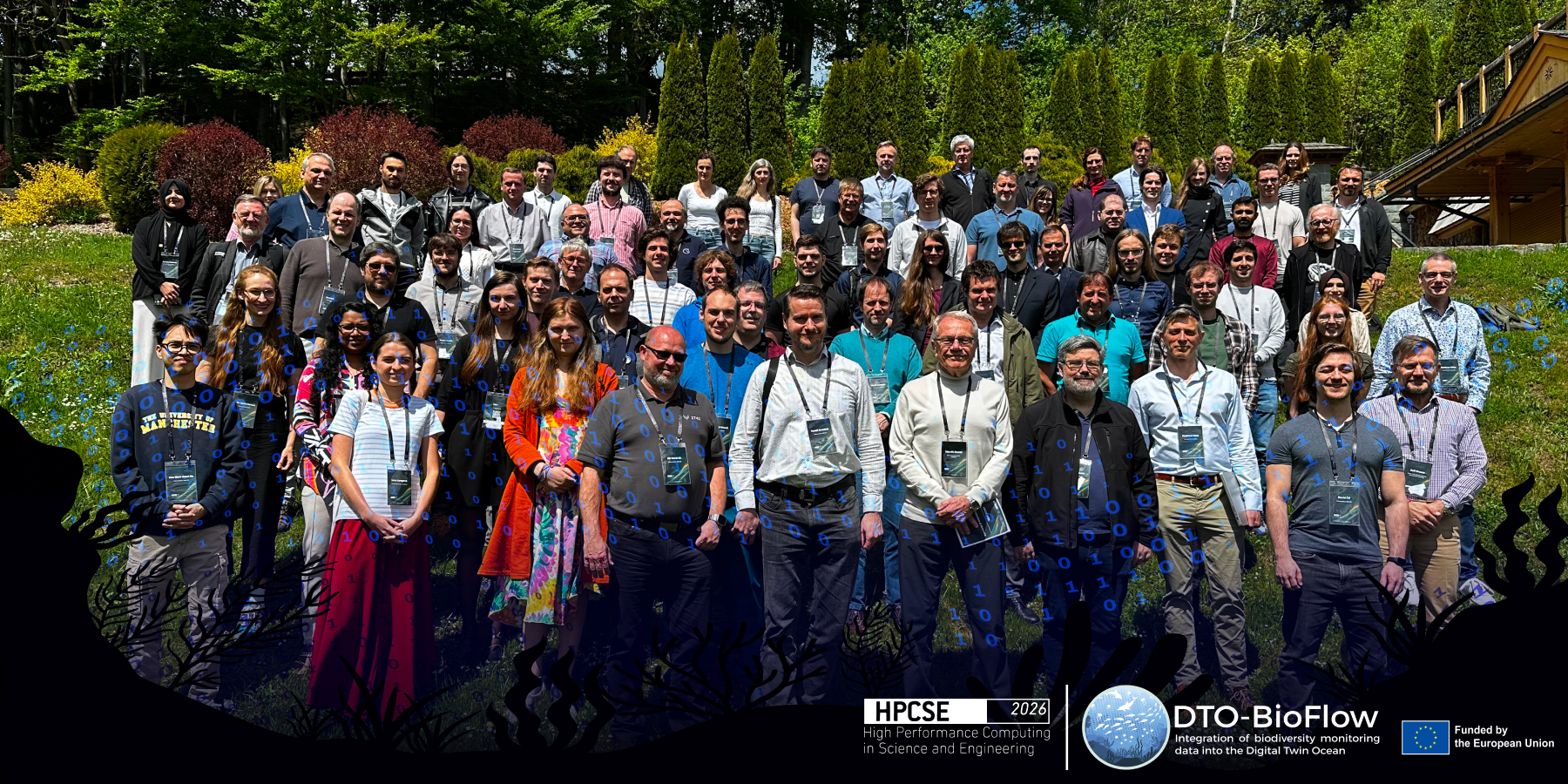
At the High Performance Computing in Science and Engineering 2026 (HPCSE 2026) conference, held on 18–21 May 2026 in the Beskydy Mountains, Czech Republic, DTO-BioFlow partner IT4Innovations showcased how high-performance computing (HPC) can help advance marine monitoring and biodiversity research.
Organised by the IT4Innovations National Supercomputing Centre, HPCSE 2026 brought together researchers, scientists and industry experts to explore the latest developments in high-performance computing, artificial intelligence, high-performance data analytics, quantum technologies and scientific visualisation. Through keynote lectures, technical sessions and poster presentations, the conference provided a valuable platform for knowledge exchange and interdisciplinary collaboration.
Two DTO-BioFlow Contributions, One Shared Goal
Representing IT4Innovations, Tomáš Martinovič presented the poster “Marine video monitoring advances leveraging HPC infrastructure” during the conference poster session. The work explores how HPC infrastructure can support the processing and analysis of increasingly large and complex volumes of marine video data, helping overcome computational challenges in large-scale biodiversity monitoring.
The poster was co-authored by Louis Roman Fiorina, Ghaith Chaabane, Kalindi Fonda, Tuomas Rossi, Victor Anton, Tomáš Martinovič and Matthias Obst, reflecting the collaborative and interdisciplinary expertise behind this work.
The conference also featured an invited talk by Matthias Obst, a DTO-BioFlow partner from the University of Gothenburg. On 20 May, he delivered a presentation entitled "Digital Twin Applications for Dynamic Assessments of Marine Biodiversity", highlighting how Digital Twin approaches can support dynamic and data-driven assessment of marine biodiversity.
Together, these contributions illustrate two important elements of the DTO-BioFlow approach: harnessing advanced computing capabilities to process complex marine observations and using Digital Twin technologies to transform these data into ecological insights for understanding marine ecosystems.
From Marine Video to Biodiversity Insights
For DTO-BioFlow, the work demonstrates the value of bringing together advanced computing, AI and novel observation techniques to transform complex biological data into actionable knowledge.
Marine video generates rich information about species, habitats and ecosystem dynamics, but extracting meaningful insights from these data at scale requires significant computational resources. By leveraging HPC-enabled approaches for marine imagery analysis, DTO-BioFlow is contributing to the development of scalable digital solutions for marine ecosystem research and biodiversity monitoring.
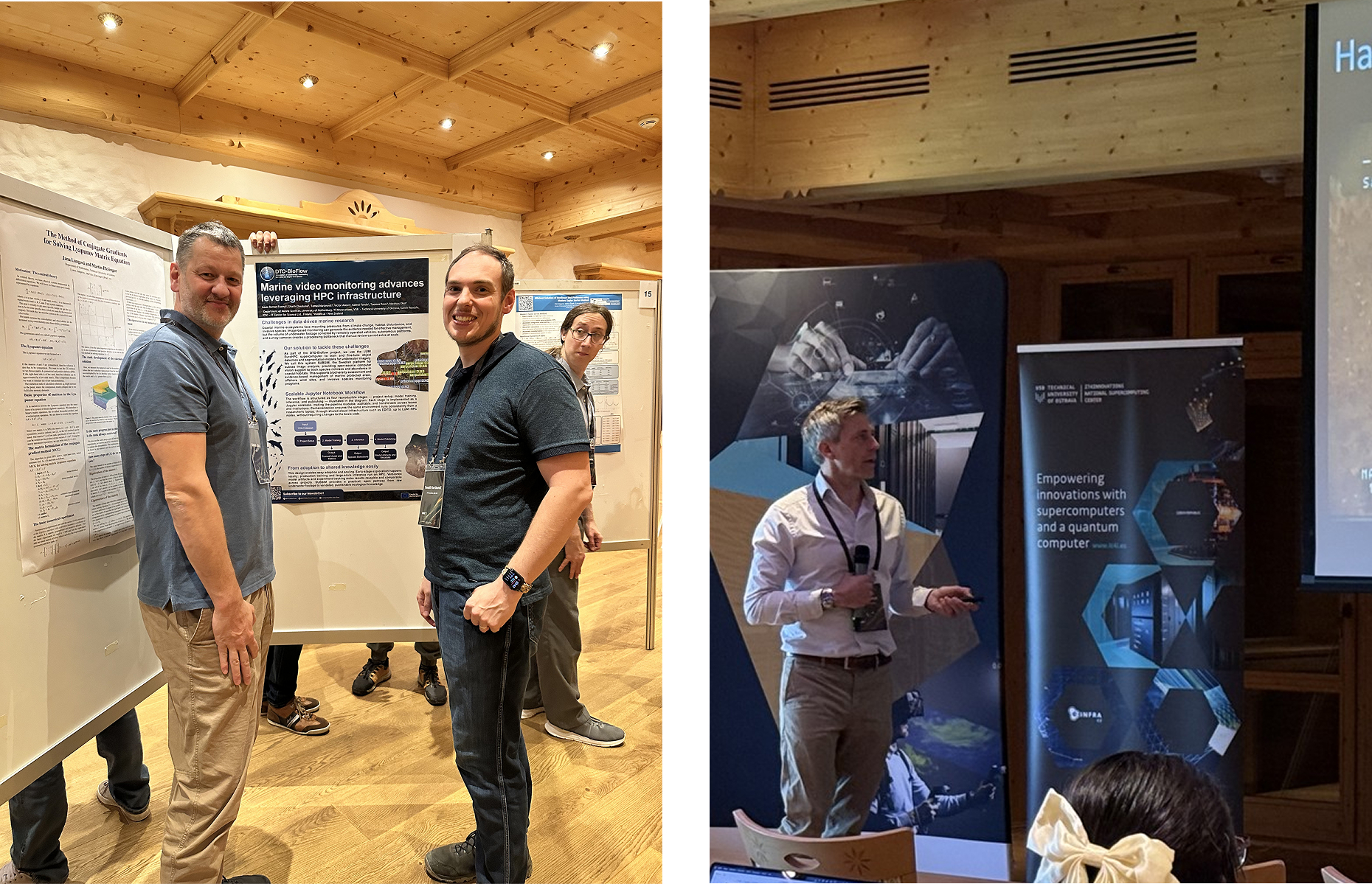
Photos provided by IT4Innovations, Markéta Dobiašová during the HPCSE 2026 (Left: Tomáš Martinovič, Right: Matthias Obst)
These advances also strengthen the wider Digital Twin Ocean ecosystem, helping connect diverse and data-intensive marine observations with the computational capabilities and digital tools needed to better understand ecosystem dynamics and support more informed marine management.
The presence of two DTO-BioFlow partners at HPCSE 2026 further demonstrates the project's interdisciplinary approach, bringing together expertise in high-performance computing, marine science, biodiversity monitoring and Digital Twin technologies to advance Europe's capacity for data-driven ocean knowledge.
Learn more about the DTO-BioFlow initiative and its contribution to the Digital Twin Ocean.