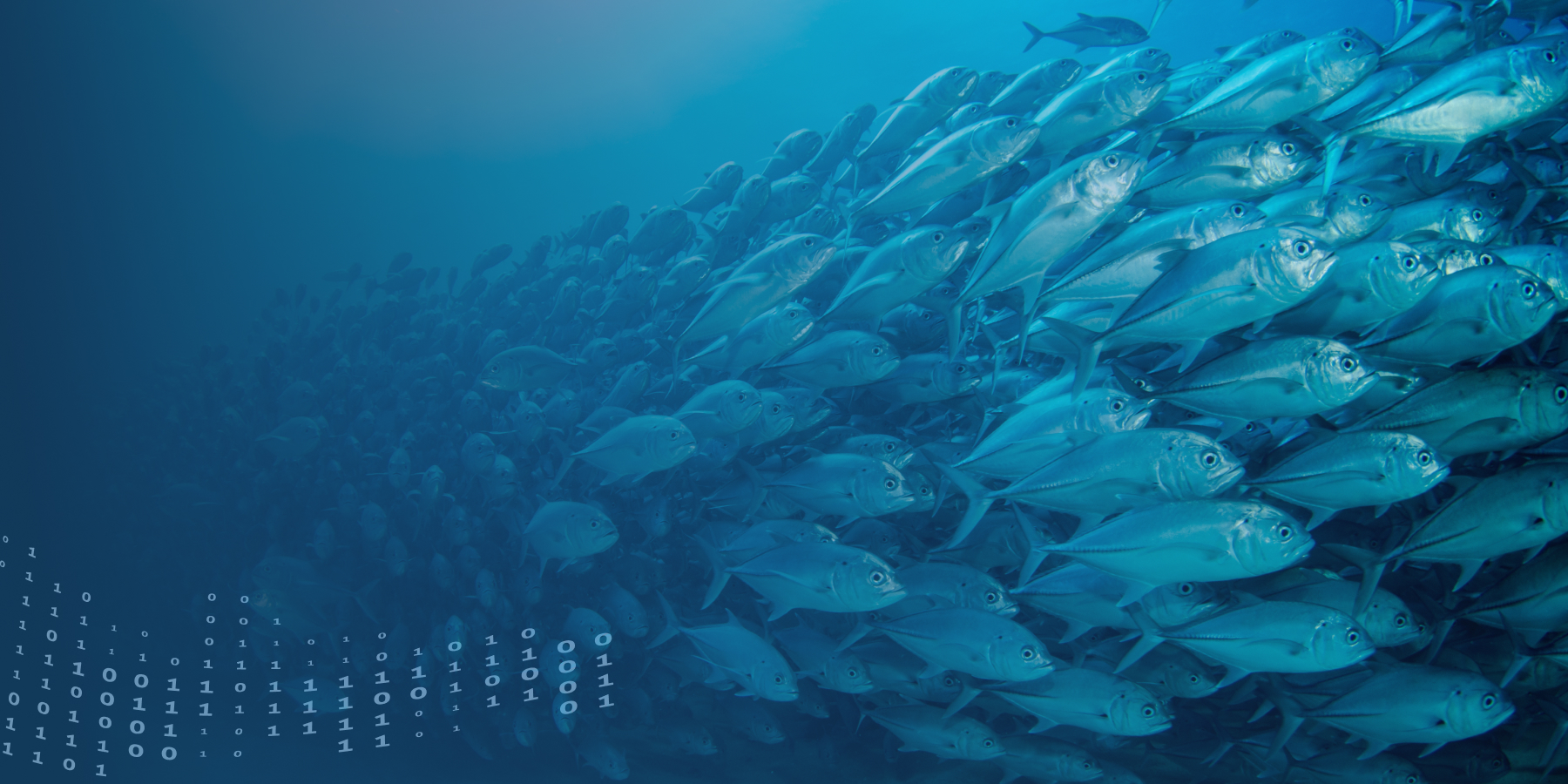
As the world marks International Day for Biological Diversity, European scientists and policymakers are acting to turn one of the greatest hidden challenges in ocean conservation into an opportunity: vast amounts of marine biodiversity data exist, but much of it remains invisible, inaccessible, or unusable.
Healthy oceans are fundamental to life on Earth, regulating climate, supporting food systems, and providing countless ecosystem services. Protecting these ecosystems and the marine biodiversity at their heart is a core goal of the European Union’s Mission to Restore our Ocean and Waters.
A major part of that effort is the development of the European Digital Twin Ocean, a powerful virtual replica of the ocean that combines observations, models, and advanced digital technologies to simulate “what-if” scenarios, supporting evidence-based policymaking, and helping societies respond to environmental change.
However, digital twins are only as good as the data streams that power them.
Despite decades of biodiversity monitoring across Europe’s seas, much marine biological data has remained fragmented or effectively “dormant”, locked away in disconnected systems or lacking pathways into major European data infrastructures, such as EMODnet.
Since launching in September 2023, DTO-BioFlow has been mobilising marine biodiversity data across Europe, helping to transform scattered observations into accessible, interoperable data flows that can feed into EMODnet and ultimately to EDITO, the public infrastructure platform for the European Digital Twin Ocean.
DTO-BioFlow is creating sustained data flows from monitoring networks, supporting data providers with training and financial assistance, and developing innovative Demonstrator Use-Cases that tackle real-world marine management challenges, from invasive species monitoring to assessing the ecological impacts of offshore renewable energy and modelling marine food webs.
The project has already achieved several major milestones. Researchers conducted a large-scale landscape analysis to identify critical biodiversity data that remains unavailable and evaluate the consequences of those gaps. A “Barriers Playbook” has also been released, mapping the technical and organisational obstacles preventing biodiversity data from flowing into European digital infrastructures.
Meanwhile, two successful data calls have awarded grants to 18 projects across Europe, enabling previously inaccessible biodiversity datasets to be integrated into EMODnet and ultimately connected to the European Digital Twin Ocean.
Importantly, the project is also pioneering new pathways for emerging biodiversity data types that currently lack established long-term repositories. These include cutting-edge genomics observations, plankton imaging data, animal biologging from fish, mammals and birds, and passive acoustic monitoring of cetaceans.
Direct links to key European biodiversity repositories — including the European Tracking Network (ETN), the Ocean Biodiversity Information System (OBIS), and EcoTaxa — are now under development and expected to be completed by early 2027.
Beyond technology, the project is helping build a stronger marine biodiversity community across Europe by promoting open science, collaboration, interoperability, and shared digital resources.
As global biodiversity loss accelerates, initiatives like DTO-BioFlow demonstrate that solving the biodiversity crisis is not only about collecting more data. It is also about ensuring that the data we collect can be used and reused, unlocking the enormous value of the data we already have.
By unlocking Europe’s hidden ocean knowledge, the project is helping create the digital foundations needed to better understand, protect, and restore marine ecosystems for future generations.
Discover how the DTO-BioFlow project is creating a seamless workflow that transforms disconnected components into a powerful tool, enabling policymakers to make informed decisions that improve ocean health.
WATCH THE VIDEO NOW!